
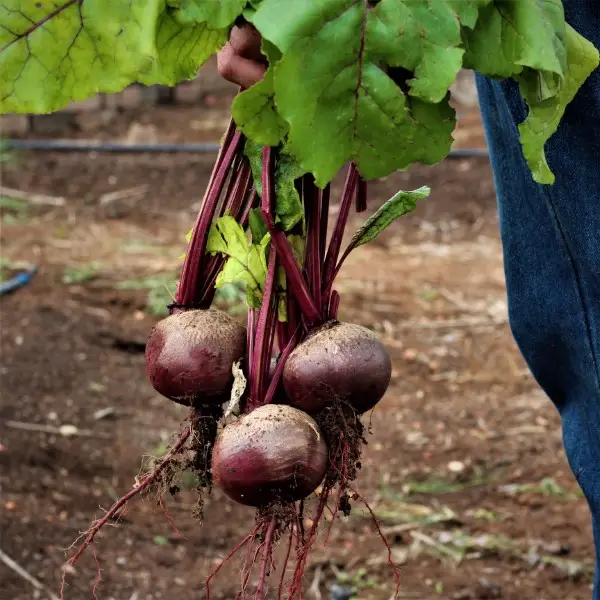
Beetroot: Crimson Globe

Botanical Name:

Beta vulgaris subsp. vulgaris

Family:

Crop Type:

Other Names:

Beet; Red Beet; Table Beet; Beet (Afrikaans); uBhithirudi (isiZulu)

Lifecycle:

Biennial, grown as annual

Uses:

Food (roots fresh, cooked, pickled, juiced; young leaves as salad greens); natural dye

Beetroot (Crimson Globe) is a cool-season root vegetable in the Amaranthaceae family. Plants produce rosettes of dark green to reddish-green leaves on red stems, with swollen, rounded taproots developing below soil level.

Roots display deep red-purple flesh and exterior; young leaves are also edible. Both roots and tender young leaves are consumed fresh, cooked, pickled, or juiced.

Cultivated in mild to cool conditions with moderate irrigation, suited to winter production in warmer regions. Crimson Globe is noted for its uniform round shape, smooth skin, and deep colour throughout the flesh.
Climate

Climate Suitability:

Cool to mild seasons; winter rainfall areas, highveld autumn to spring, coastal regions year-round

Frost Tolerance:

Light frost tolerant

Heat Tolerance:

Moderate

Sun Type:

Full sun to partial shade

Soil Texture:

Sandy loam to loam

Drainage Requirement:

Well-drained

Preferred pH Range:

6.0–7.5 pH

Water Requirement:

Moderate

Irrigation Type:

Drip; Micro Irrigation; Sprinkler; Manual Watering

Propagation

Propagation Type:

Seed

Propagation Season:

Late summer to winter in warm areas; autumn to spring in cooler areas

Germination Days:

5–8 days

Days to Transplant:

28–42 days

Propagation Notes:

Direct sow; seed clusters may produce multiple seedlings requiring thinning.

Planting

Planting Season:

Autumn to spring; avoid hottest months in very warm regions

Plants Per Square Foot:
Square Foot Method

9 per ft²

Plant Spacing:
Square Foot Method

10 cm

Plant Spacing:
Traditional Method

10–15 cm

Row Spacing:
Traditional Method

30–40 cm

Container Suitable:

Yes

Container Notes:

Hydroponic Compatible:

Conditional

Hydroponic Systems:

Hydroponic Notes:

Aquaponic Suitable:

Conditional

Aquaponic Notes:

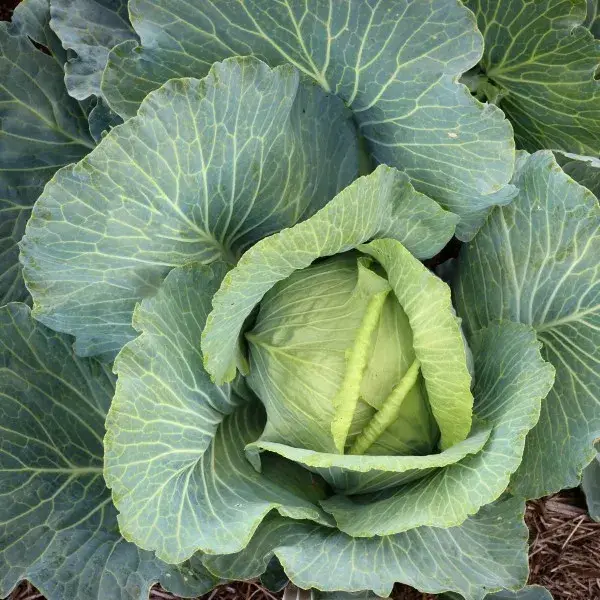
Shallow roots allow interplanting with deeper-rooted crops; brassicas and alliums are traditional companions.
Field mustard and very competitive root crops may reduce yields where spacing is limited.
Pests & Diseases

Pest Types:

Aphids; Leaf Miners; Cutworms; Nematodes; Flea Beetles

Pest Control:

Use crop rotation, fine mesh covers, weed control, monitoring and biological or approved low-toxicity controls.

Disease Types:

Leaf spot (Cercospora), Damping-off, Downy mildew, Root rot, Scab

Disease Control:

Avoid waterlogging, rotate crops, use clean seed, improve airflow and remove infected residues.

Harvest

Planting Season:

Autumn to spring; avoid hottest months in very warm regions

Plant Spacing:
Square Foot Method

10 cm

Plant Spacing:
Traditional Method

10–15 cm

Row Spacing:
Traditional Method

30–40 cm

Nutrition

Edible Parts:

Roots; Leaves

Reference Food State:

Raw root

Serving Size:

100 g

Nutrition Basis:

Per 100 g raw edible portion

Calories (kcal):

43 kcal

Calories (kj):

180 kj

Total Carbohydrates:

9.56 g

Protein:

1.61 g

Total Fat:

0.17 g

Dietary Fibre:

2.8 g

Starch:

0 g

Total Sugars:

6.76 g

Monounsaturated Fat:

0.032 g

Omega-3 Fatty Acids:

0.006 g

Omega-6 Fatty Acids:

0.055 g

Polyunsaturated Fat:

0.046 g

Saturated Fat:

0.027 g

Trans Fat:

0 g

Calcium:

16 mg

Chromium:

0 mcg

Copper:

0.075 mg

Iron:

0.8 mg

Iodine:

0 mcg

Magnesium:

23 mg

Manganese:

0.329 mg

Molybdenum:

0 mcg

Phosphorus:

40 mg

Potassium:

325 mg

Selenium:

0.7 mcg

Sodium:

78 mg

Zinc:

0.35 mg

Vitamin A:

2 mcg RE

Thiamin:
Vitamin B1

0.031 mg

Riboflavin:
Vitamin B2

0.04 mg

Niacin:
Vitamin B3

0.334 mg NE

Pantothenic Acid:
Vitamin B5

0.155 mg

Vitamin B6:

0.067 mg

Biotin:
Vitamin B7

0 mcg

Folate:
Vitamin B9

109 mcg

Vitamin B12:

0 mcg

Vitamin C:

4.9 mg

Vitamin D:

0 mcg

Vitamin E:

0.04 mg alpha-tocopherol

Vitamin K:

0.2 mcg

Recipes