
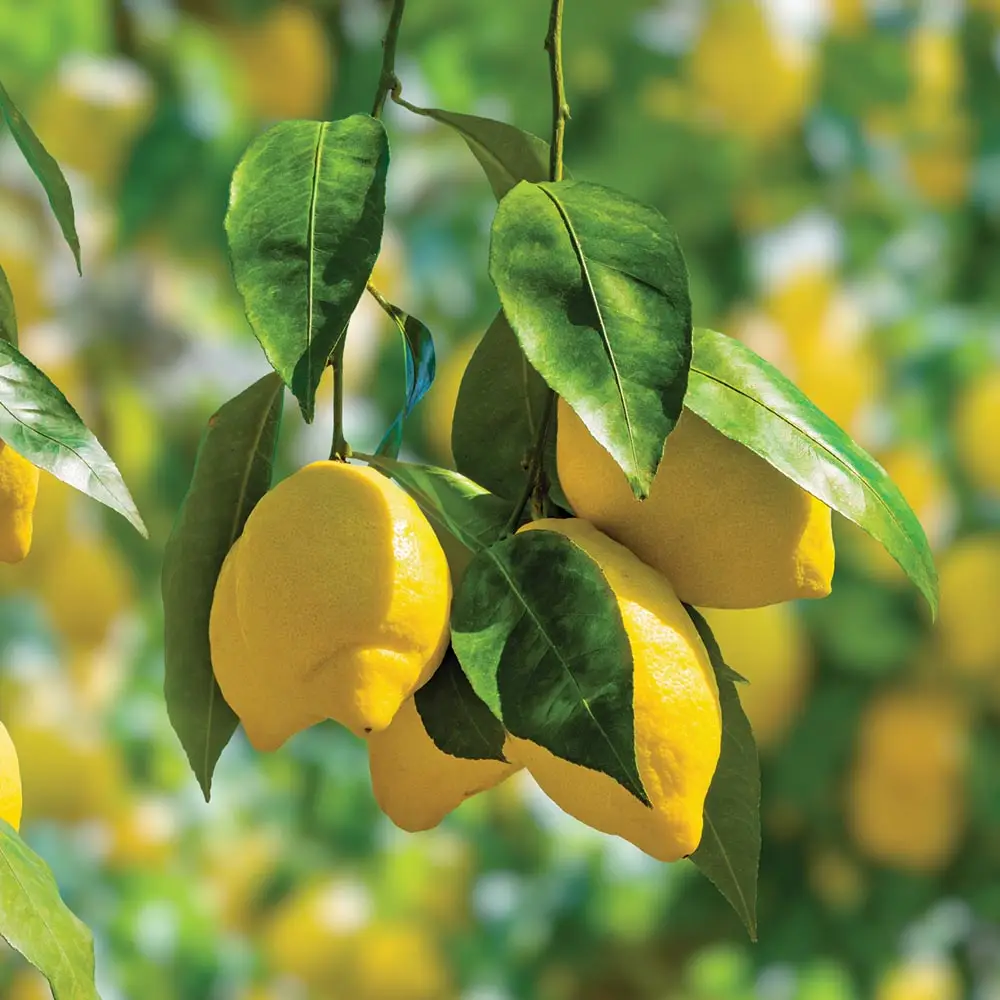
Lemon

Botanical Name:

Citrus limon

Family:

Crop Type:

Other Names:

Common Lemon; Suurlemoen (Afrikaans); uLamula (isiZulu)

Lifecycle:

Perennial, evergreen

Uses:

Food (juice, zest, culinary flavouring); processing (preserves, beverages); cleaning agent

Lemon is an evergreen citrus tree in the Rutaceae family. Trees form medium-sized canopies with glossy, aromatic leaves and thorny branches, producing fragrant white flowers tinged with pink.

Fruits are oval with pointed ends, featuring bright yellow rind with aromatic oil glands and pale yellow, highly acidic juice. Juice and zest are the primary edible parts, used in culinary applications, beverages, and preserving.

Cultivated in frost-free subtropical to Mediterranean climates on grafted rootstock; sensitive to cold damage. Notable for year-round production potential in suitable climates and multiple harvests from everbearing cultivars.

Climate

Climate Suitability:

Mediterranean to subtropical; Western Cape, Eastern Cape, frost-free inland areas

Frost Tolerance:

Light frost tolerant

Heat Tolerance:

High

Sun Type:

Full sun

Soil Texture:

Sandy loam to loam

Drainage Requirement:

Well-drained

Preferred pH Range:

5.5–6.5 pH

Water Requirement:

Moderate; drought sensitive when fruiting

Irrigation Type:

Drip; Micro Irrigation; Basin Irrigation

Propagation

Propagation Type:

Grafting; Cutting; Seed

Propagation Season:

Spring to summer

Germination Days:

7–14 days

Days to Transplant:

90–180 days

Propagation Notes:

Grafted plants on suitable rootstock preferred for disease resistance and productivity.

Planting

Planting Season:

Spring to summer

Plants Per Square Foot:
Square Foot Method

0.25 per ft²

Plant Spacing:
Square Foot Method

60 cm

Plant Spacing:
Traditional Method

400–600 cm

Row Spacing:
Traditional Method

500–700 cm

Container Suitable:

Yes; dwarf types in large containers

Container Notes:

Hydroponic Compatible:

No

Hydroponic Systems:

Hydroponic Notes:

Aquaponic Suitable:

No

Aquaponic Notes:

Nitrogen-fixing groundcovers and aromatic herbs benefit citrus; avoid grass competition near trunk.

No crops on recorded.

Please contact us should you feel that this is incorrect.

Grass and strong root competitors reduce tree vigour; avoid planting near walnut.

No crops on recorded.

Please contact us should you feel that this is incorrect.

Pests & Diseases

Pest Types:

Citrus Psyllid; Scale Insects; Aphids; Mealybugs; Leaf Miner; Fruit Fly

Pest Control:

Monitor for psyllid (vector of HLB), use horticultural oils, biological controls, sanitation and approved treatments.

Disease Types:

Citrus canker, Phytophthora root rot, Sooty mould, Greening (HLB where present), Alternaria brown spot

Disease Control:

Use certified disease-free nursery stock, maintain drainage, remove infected material, manage psyllid populations and ensure tree nutrition.

Harvest

Planting Season:

Spring to summer

Plant Spacing:
Square Foot Method

60 cm

Plant Spacing:
Traditional Method

400–600 cm

Row Spacing:
Traditional Method

500–700 cm

Nutrition

Edible Parts:

Fruit

Reference Food State:

Raw fruit without peel

Serving Size:

100 g

Nutrition Basis:

Per 100 g raw edible portion

Calories (kcal):

29 kcal

Calories (kj):

121 kj

Total Carbohydrates:

9.32 g

Protein:

1.1 g

Total Fat:

0.3 g

Dietary Fibre:

2.8 g

Starch:

0 g

Total Sugars:

2.5 g

Monounsaturated Fat:

0.011 g

Omega-3 Fatty Acids:

0.026 g

Omega-6 Fatty Acids:

0.063 g

Polyunsaturated Fat:

0.089 g

Saturated Fat:

0.039 g

Trans Fat:

0 g

Calcium:

26 mg

Chromium:

0 mcg

Copper:

0.037 mg

Iron:

0.6 mg

Iodine:

0 mcg

Magnesium:

8 mg

Manganese:

0.03 mg

Molybdenum:

0 mcg

Phosphorus:

16 mg

Potassium:

138 mg

Selenium:

0.4 mcg

Sodium:

2 mg

Zinc:

0.06 mg

Vitamin A:

1 mcg RE

Thiamin:
Vitamin B1

0.04 mg

Riboflavin:
Vitamin B2

0.02 mg

Niacin:
Vitamin B3

0.1 mg NE

Pantothenic Acid:
Vitamin B5

0.19 mg

Vitamin B6:

0.08 mg

Biotin:
Vitamin B7

0 mcg

Folate:
Vitamin B9

11 mcg

Vitamin B12:

0 mcg

Vitamin C:

53 mg

Vitamin D:

0 mcg

Vitamin E:

0.15 mg alpha-tocopherol

Vitamin K:

0 mcg

Recipes