
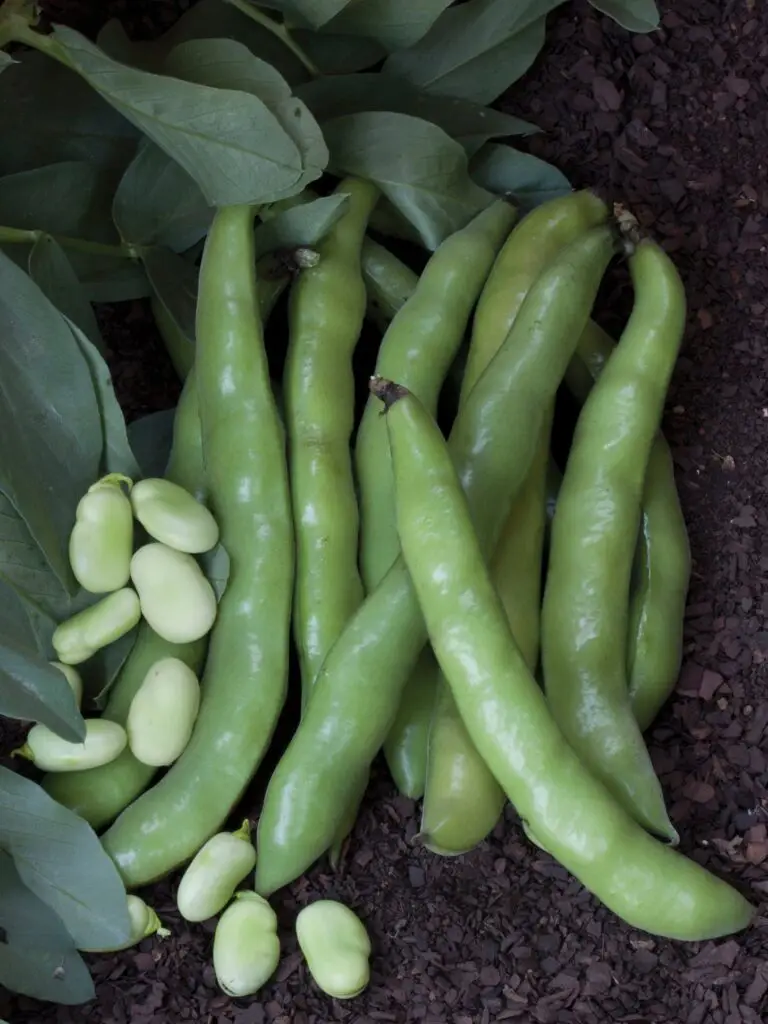
Broad Bean: Long Pod Aquadulce

Botanical Name:

Vicia faba

Family:

Crop Type:

Other Names:

Fava Bean; Faba Bean; Horse Bean; Boerboon (Afrikaans)

Lifecycle:

Annual

Uses:

Food (fresh or dried seeds, young pods); cover crop; soil improvement (nitrogen fixation); fodder

Broad Bean (Long Pod Aquadulce) is a cool-season legume in the Fabaceae family. Plants grow upright with hollow, square stems and grey-green compound leaves, producing clusters of white flowers with dark markings.

Pods are long and broad, containing large, flat seeds with pale green to cream flesh. Seeds are the primary edible part, consumed fresh when immature or dried for storage; very young pods may also be eaten.

Cultivated in cool to cold conditions, tolerating frost and preferring autumn to winter planting in mild climates. Long Pod Aquadulce is noted for its cold hardiness, long pods, and suitability for overwintering.

Climate

Climate Suitability:

Cool to cold seasons; winter rainfall regions, highveld autumn to winter

Frost Tolerance:

Frost tolerant

Heat Tolerance:

Low; bolts in heat

Sun Type:

Full sun

Soil Texture:

Loam to clay loam

Drainage Requirement:

Well-drained

Preferred pH Range:

6.0–7.0 pH

Water Requirement:

Moderate

Irrigation Type:

Drip; Sprinkler; Furrow

Propagation

Propagation Type:

Seed

Propagation Season:

Autumn to winter

Germination Days:

10–14 days

Days to Transplant:

No Data Found

Propagation Notes:

Direct sow large seeds; inoculation may improve nodulation in poor soils.

Planting

Planting Season:

Autumn to winter

Plants Per Square Foot:
Square Foot Method

4 per ft²

Plant Spacing:
Square Foot Method

15 cm

Plant Spacing:
Traditional Method

20–25 cm

Row Spacing:
Traditional Method

60–75 cm

Container Suitable:

Conditional; large containers

Container Notes:

Hydroponic Compatible:

No

Hydroponic Systems:

Hydroponic Notes:

Aquaponic Suitable:

No

Aquaponic Notes:

Fixes atmospheric nitrogen benefiting subsequent crops; provides wind shelter for lower-growing vegetables.

No crops on recorded.

Please contact us should you feel that this is incorrect.

Alliums are traditionally considered poor companions for legumes.

No crops on recorded.

Please contact us should you feel that this is incorrect.

Pests & Diseases

Pest Types:

Aphids; Bean Weevil; Cutworms; Thrips

Pest Control:

Monitor aphid populations, rotate crops, support plants and use biological controls or approved treatments when thresholds exceeded.

Disease Types:

Chocolate spot (Botrytis fabae), Rust, Root rot, Downy mildew

Disease Control:

Use crop rotation, ensure airflow, avoid overhead irrigation, remove infected material and use resistant varieties where available.

Harvest

Planting Season:

Autumn to winter

Plant Spacing:
Square Foot Method

15 cm

Plant Spacing:
Traditional Method

20–25 cm

Row Spacing:
Traditional Method

60–75 cm

Nutrition

Edible Parts:

Seeds; Young Pods

Reference Food State:

Raw immature seeds

Serving Size:

100 g

Nutrition Basis:

Per 100 g raw edible portion

Calories (kcal):

88 kcal

Calories (kj):

368 kj

Total Carbohydrates:

17.63 g

Protein:

7.92 g

Total Fat:

0.73 g

Dietary Fibre:

7.5 g

Starch:

0 g

Total Sugars:

9.21 g

Monounsaturated Fat:

0.067 g

Omega-3 Fatty Acids:

0.046 g

Omega-6 Fatty Acids:

0.28 g

Polyunsaturated Fat:

0.326 g

Saturated Fat:

0.138 g

Trans Fat:

0 g

Calcium:

37 mg

Chromium:

0 mcg

Copper:

0.402 mg

Iron:

1.55 mg

Iodine:

0 mcg

Magnesium:

33 mg

Manganese:

0.661 mg

Molybdenum:

0 mcg

Phosphorus:

129 mg

Potassium:

332 mg

Selenium:

1.2 mcg

Sodium:

25 mg

Zinc:

1 mg

Vitamin A:

16 mcg RE

Thiamin:
Vitamin B1

0.133 mg

Riboflavin:
Vitamin B2

0.29 mg

Niacin:
Vitamin B3

1.06 mg NE

Pantothenic Acid:
Vitamin B5

0.225 mg

Vitamin B6:

0.104 mg

Biotin:
Vitamin B7

0 mcg

Folate:
Vitamin B9

148 mcg

Vitamin B12:

0 mcg

Vitamin C:

3.7 mg

Vitamin D:

0 mcg

Vitamin E:

0.05 mg alpha-tocopherol

Vitamin K:

40.9 mcg

Recipes