
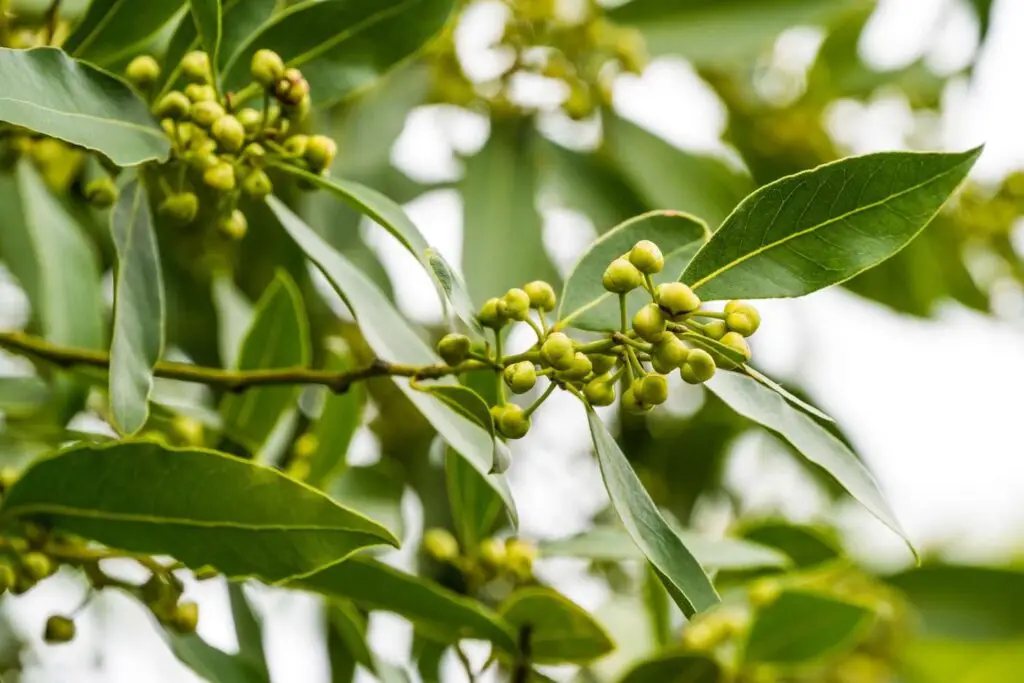
Bay

Botanical Name:

Laurus nobilis

Family:

Crop Type:

Other Names:

Bay Laurel; Sweet Bay; True Laurel; Lourierblaar (Afrikaans)

Lifecycle:

Perennial, evergreen

Uses:

Culinary herb (dried leaves for soups, stews, sauces); ornamental hedge; aromatic

Bay (Laurus nobilis) is an evergreen tree or large shrub in the Lauraceae family. Plants develop dense, upright growth with glossy, dark green, leathery leaves that are aromatic when crushed.

Leaves are the primary edible part, typically harvested mature and used fresh or dried as a culinary seasoning in slow-cooked dishes. Dried leaves have a more concentrated flavour and are removed before serving.

Cultivated in mild Mediterranean to subtropical climates, tolerating light frost once established and suitable for hedging, container growing, or specimen planting. Notable for its longevity, slow growth rate, and traditional use as a bay laurel wreath plant.

Climate

Climate Suitability:

Mediterranean to subtropical; tolerates light frost once established; suited to Western Cape and mild inland areas

Frost Tolerance:

Light frost tolerant

Heat Tolerance:

Moderate

Sun Type:

Full sun to partial shade

Soil Texture:

Loam to clay loam

Drainage Requirement:

Well-drained

Preferred pH Range:

6.0–8.0 pH

Water Requirement:

Low to moderate

Irrigation Type:

Drip; Micro Irrigation; Manual Watering

Propagation

Propagation Type:

Cutting; Seed; Layering

Propagation Season:

Spring to summer

Germination Days:

30–90 days

Days to Transplant:

180–365 days

Propagation Notes:

Semi-hardwood cuttings are slow to root; plant nursery stock for reliability.

Planting

Planting Season:

Spring or autumn

Plants Per Square Foot:
Square Foot Method

0.25 per ft²

Plant Spacing:
Square Foot Method

60 cm

Plant Spacing:
Traditional Method

200–400 cm

Row Spacing:
Traditional Method

300–500 cm

Container Suitable:

Yes; as pruned shrub

Container Notes:

Hydroponic Compatible:

No

Hydroponic Systems:

Hydroponic Notes:

Aquaponic Suitable:

No

Aquaponic Notes:

Provides shelter for smaller herbs; aromatic foliage may deter some pests; suits Mediterranean herb gardens.

No crops on recorded.

Please contact us should you feel that this is incorrect.

Waterlogged or heavily shaded positions reduce vigour; avoid planting where root competition is intense.

No crops on recorded.

Please contact us should you feel that this is incorrect.

Pests & Diseases

Pest Types:

Scale Insects; Aphids; Psyllids; Mites

Pest Control:

Prune for airflow, monitor for scale, apply horticultural oil if infestations occur and encourage natural predators.

Disease Types:

Root rot (Phytophthora), Leaf spot, Powdery mildew

Disease Control:

Avoid waterlogging, ensure good drainage, remove infected leaves and maintain plant vigour through appropriate nutrition.

Harvest

Planting Season:

Spring or autumn

Plant Spacing:
Square Foot Method

60 cm

Plant Spacing:
Traditional Method

200–400 cm

Row Spacing:
Traditional Method

300–500 cm

Nutrition

Edible Parts:

Leaves

Reference Food State:

Dried leaves

Serving Size:

100 g

Nutrition Basis:

Per 100 g dried

Calories (kcal):

313 kcal

Calories (kj):

1310 kj

Total Carbohydrates:

74.97 g

Protein:

7.61 g

Total Fat:

8.36 g

Dietary Fibre:

26.3 g

Starch:

0 g

Total Sugars:

0 g

Monounsaturated Fat:

1.64 g

Omega-3 Fatty Acids:

1.05 g

Omega-6 Fatty Acids:

0.73 g

Polyunsaturated Fat:

2.29 g

Saturated Fat:

2.28 g

Trans Fat:

0 g

Calcium:

834 mg

Chromium:

0 mcg

Copper:

0.416 mg

Iron:

43 mg

Iodine:

0 mcg

Magnesium:

120 mg

Manganese:

8.167 mg

Molybdenum:

0 mcg

Phosphorus:

113 mg

Potassium:

529 mg

Selenium:

2.8 mcg

Sodium:

23 mg

Zinc:

3.7 mg

Vitamin A:

309 mcg RE

Thiamin:
Vitamin B1

0.009 mg

Riboflavin:
Vitamin B2

0.421 mg

Niacin:
Vitamin B3

2.005 mg NE

Pantothenic Acid:
Vitamin B5

0 mg

Vitamin B6:

1.74 mg

Biotin:
Vitamin B7

0 mcg

Folate:
Vitamin B9

180 mcg

Vitamin B12:

0 mcg

Vitamin C:

46.5 mg

Vitamin D:

0 mcg

Vitamin E:

0 mg alpha-tocopherol

Vitamin K:

0 mcg

Recipes